The Artemis II mission has officially come to an end.
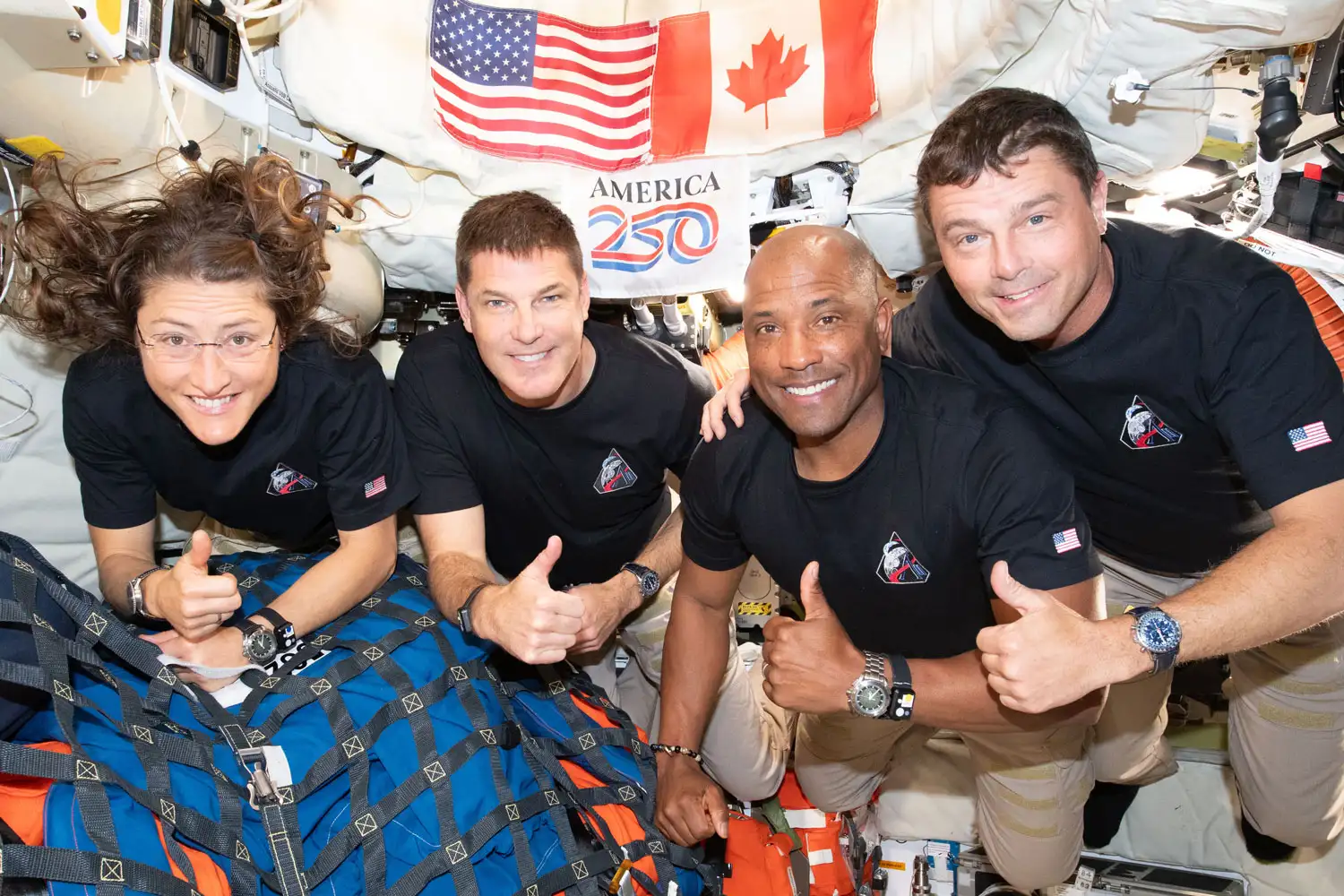
Four astronauts — pilot Victor Glover, mission specialist Christina Koch, and commander Reid Wiseman from NASA, along with Jeremy Hansen of the Canadian Space Agency — safely splashed down in the Pacific Ocean near San Diego shortly after 5:07 p.m. local time on Friday, April 10.
Earlier, around 4:53 p.m., the spacecraft reentered Earth’s upper atmosphere at approximately 400,000 feet. As expected, a six-minute communications blackout followed, caused by plasma forming around the Orion capsule during reentry.
During this phase, the capsule reached its top speed of roughly 24,661 mph — more than 30 times the speed of sound — while also enduring peak heating, with exterior temperatures nearing 4,000°F.
Communication was restored as the spacecraft descended to about 157,000 feet, drawing cheers from mission control in Houston, with just over five minutes remaining before landing.
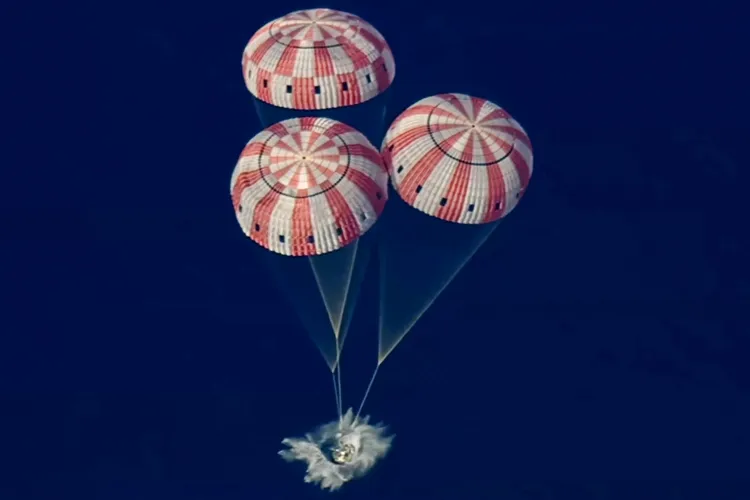
A sequence of parachutes then deployed to slow the capsule’s descent, allowing it to land gently in the ocean at about 19 mph.
Although the crew did not land on the Moon, the mission served as a crucial test flight aimed at paving the way for a human return to the lunar surface within the next two years.
During their journey, the Artemis II astronauts set a new record for the farthest distance traveled by humans from Earth, surpassing the 1970 Apollo 13 milestone of 248,655 miles. They also captured remarkable images of the Moon’s far side.
In the hours leading up to reentry, attention was focused on the spacecraft’s heat shield, which had previously raised concerns. To address this, NASA adjusted the mission’s reentry trajectory to ensure the crew’s safety.
This mission marks a significant milestone, coming more than 50 years after the last crewed lunar mission, Apollo 17, in 1972.
Looking ahead, another lunar mission is in development and could potentially launch as early as 2028.
As NASA official Patty Casas Horn noted earlier this year, while a Moon landing remains the ultimate goal, Artemis II was primarily about testing and supporting the crew.
Wiseman also emphasized the mission’s importance, describing it as a critical step toward establishing a long-term human presence on the Moon, adding that being first is only meaningful if more missions follow.