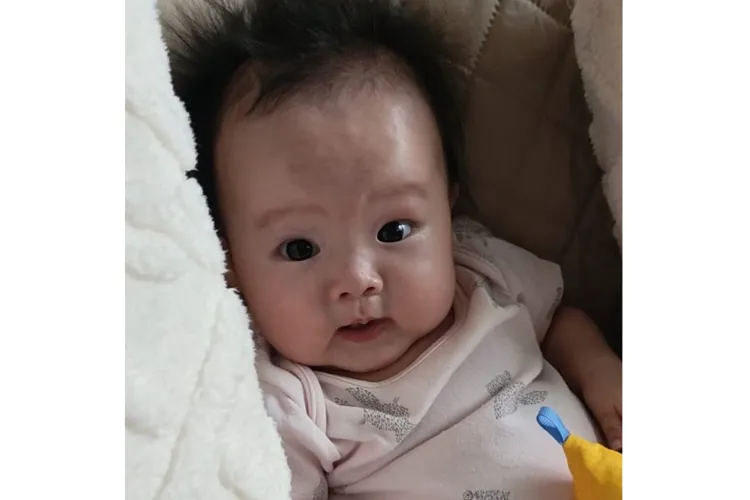
A couple has shared their emotional journey after a successful fundraising effort gave their infant daughter a chance at life-saving treatment.
Five-month-old Ginny, born in Singapore, is described by her parents as a cheerful and inquisitive baby. “She lights up when she sees familiar faces and recognizes the voices of those who love her. She observes the world with a sense of wonder,” they wrote on the Ray of Hope fundraising platform.
However, their joy was shaken when Ginny was diagnosed with Spinal Muscular Atrophy (SMA), a rare and potentially fatal genetic condition that could take her life before the age of two without treatment. “Her mind is eager to explore the world, but her small body is gradually losing the ability to move,” her parents shared.
SMA is a hereditary neuromuscular disorder that causes muscles to weaken and deteriorate over time. Ginny was diagnosed with Type 1 SMA—the most common and severe form—according to her doctor, Dr. Jocelyn Lim.
Symptoms of the condition typically appear within the first six months of life. Although rare—affecting about one in 10,000 people—cases like Ginny’s do occur in Singapore, where only a handful are diagnosed each year.
Ginny first showed signs around three months old when a caregiver noticed she struggled to lift her head during tummy time. At first, doctors reassured the family that it might not be serious, but advised them to keep monitoring her development.
“She was alert and responsive like any other baby, but her movements were different. Her legs hardly moved,” her mother recalled.
Her condition worsened in January 2026 when she was hospitalized with pneumonia. Continued breathing difficulties led the family to seek help at KK Women’s and Children’s Hospital, where she received her diagnosis in late February.
Dr. Lim explained that babies with Type 1 SMA often have weak muscle tone, limited neck control, difficulty swallowing, and frequent respiratory infections. As the disease progresses, it leads to severe muscle weakness, breathing complications, and feeding challenges. Without long-term medical support, most children with this condition do not survive beyond two years of age.
There are treatments available that could significantly improve Ginny’s chances. One option is gene therapy known as Zolgensma, while another is an oral medication called Risdiplam. While some financial support exists for Zolgensma, Risdiplam is not subsidized in Singapore and costs over $1.8 million.
In hopes of securing the treatment, Ginny’s parents launched a fundraiser on March 12 through Ray of Hope. By March 21, they had successfully reached their goal.
In a heartfelt update, they expressed deep gratitude: “When we started, we didn’t know what to expect. So many people went out of their way to support us—sharing Ginny’s story and standing with us in hope. We are truly touched by the kindness and generosity we’ve received. Every contribution has brought Ginny closer to the treatment she urgently needs.”
They added that they are now working with the hospital to begin therapy soon, with their immediate priority being to keep Ginny as healthy as possible.
The family also shared their appreciation on Instagram, thanking everyone who supported them and continues to follow Ginny’s journey.