What happens when you combine Henry Winkler’s smooth charm with Michael Keaton’s wild comedic energy? You get Night Shift — a hidden gem of 1980s comedy!
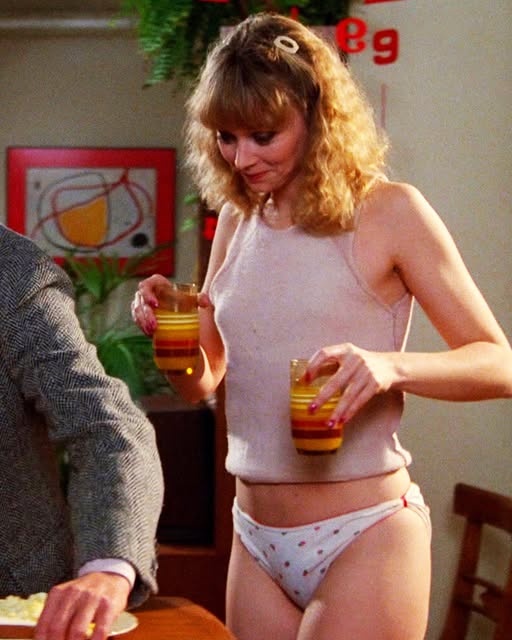
Released in 1982, Night Shift marked Ron Howard’s directorial debut and quickly found its place as a cult classic. The film features Winkler and Keaton’s unforgettable chemistry, Shelley Long’s endearing presence, and even a brief appearance by a young Kevin Costner. But one of the most talked-about moments? Shelley Long’s unforgettable kitchen scene. Let’s uncover the behind-the-scenes stories that made this film such a unique favorite.
From Morgue Worker to Unexpected Entrepreneur
Set in a New York City morgue, the story centers on Chuck Lumley (Henry Winkler), a shy, quiet night-shift worker, who gets a chaotic new coworker — the energetic and offbeat Bill Blazejowski (Michael Keaton). When the duo stumble upon a strange opportunity — running an upscale escort service from the morgue — hilarity and chaos ensue.
What truly elevates this movie is the chemistry between its leads. All three bring a natural warmth to their roles, making the absurd plot surprisingly heartwarming.
Keaton’s Breakout Role
Michael Keaton’s performance in Night Shift is impossible to ignore. Though practically unknown at the time, Keaton’s goofy yet magnetic energy stood out. He had to audition multiple times before landing the role, but his fast-talking, spontaneous style won everyone over.
Keaton’s secret to getting in character? Blasting Bruce Springsteen’s “10th Avenue Freeze-Out.” He remembers watching the film alone in the theater on opening day — calling the experience simply “wonderful.”
Winkler’s Support Behind the Scenes
Though Keaton’s energetic presence often stole the spotlight, much of that success can be credited to Winkler’s generosity as a co-star. Director Ron Howard revealed that Winkler chose the quieter role and actively helped Keaton shine. “Henry helped Michael steal the movie,” Howard said, praising Winkler for encouraging Keaton to push the comedic boundaries in their scenes.
Winkler wanted to distance himself from his iconic “Fonzie” persona and opted to play the timid Chuck — joking that he finally got to play Richie Cunningham instead.
Tension Turned Into Chemistry
Despite their great on-screen dynamic, Keaton and Winkler never worked together again — perhaps due to their rocky start. Winkler initially had doubts about working with Keaton, but Ron Howard pointed out that this discomfort mirrored their characters’ dynamic. That uneasy tension actually gave their performances an extra layer of realism.
Stars Who Missed Out
Michael Keaton wasn’t the first choice for the role of Bill. The team originally approached comedy legends like John Belushi, Dan Aykroyd, Bill Murray, John Candy, Kurt Russell, and Mickey Rourke — but none took the part. Writer Lowell Ganz had seen Keaton perform and insisted, “He’s going to be a star for someone — it might as well be for us.”
Comedic Improv Gold
Keaton’s improvisation skills brought many spontaneous laughs to the film. One of the best examples? When a blind man asks for money, Keaton’s character writes him a check. That unexpected punchline sums up his off-the-wall humor perfectly.
Director Cameos and Hidden Celebs
Ron Howard didn’t just direct — he appeared twice in the movie: once sharing a kiss with his wife and again as a pesky subway saxophonist. His brother, Clint Howard, also pops up as the quirky Jeffrey.
Kevin Costner appears briefly at a morgue party, playing a frat boy — no lines, just college vibes and a solo cup. And a young Shannen Doherty makes her feature film debut as a little “Bluebird” girl in the elevator.
Birthplace of a Famous Song
The movie soundtrack introduced the world to “That’s What Friends Are For,” first recorded by Rod Stewart. The song later became a massive hit in 1986, when Warwick, Elton John, Gladys Knight, and Stevie Wonder re-recorded it to raise funds for AIDS research — bringing in over $3 million.
Other standout songs in the movie include Quarterflash’s “Night Shift,” Van Halen’s “You Really Got Me,” and a live version of “Jumpin’ Jack Flash” by The Rolling Stones.
Shelley Long’s Reluctant Role
Shelley Long plays Belinda, a tough yet sweet escort who wins over Chuck’s heart. Though hesitant at first to take on the role of a prostitute, Long did her research and eventually embraced the part. She even showed up to her audition dressed for the role, immediately impressing the filmmakers.
Critics affectionately dubbed her “the happiest, most wholesome hooker ever on screen.”
Egg Mix-up and Film Goofs
One memorable breakfast scene has Belinda cooking eggs in her underwear. Chuck asks for scrambled — but she’s clearly frying them! Still, by the time they sit down, the eggs have magically turned scrambled.
Other small errors include Chuck calling a “Bluebird” girl a “Bluebell” and a subway scene showing the Times Square–Grand Central shuttle — which doesn’t actually stop anywhere in between, despite a character getting off.
Behind the Underwear Scene
Shelley Long wasn’t exactly thrilled about walking around in lingerie, even if her character was fine with it. Off-camera, she admitted it was awkward. When asked what her husband thought, she joked, “That’s a part of my anatomy he likes.”
Why This Cast Was Irreplaceable
The unique chemistry between Winkler, Keaton, and Long created something magical. Their warmth, comedic timing, and personal growth arcs turned Night Shift into more than just a comedy — it became a story about friendship and unexpected connections.
What’s your favorite moment from Night Shift? Share this story with your friends and take a fun trip back to one of the funniest films of the ’80s!