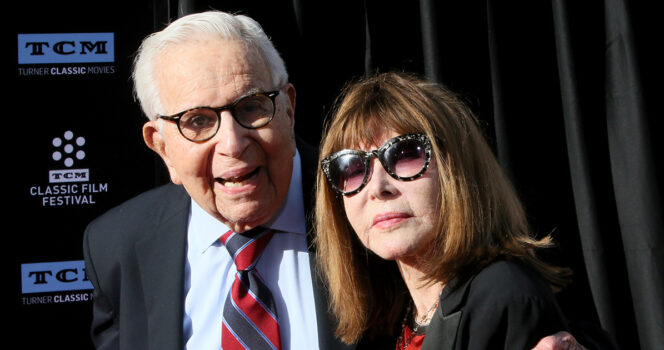
In the 1950s, Hollywood glittered with elegance and opportunity—but behind the glamour stood a powerful studio system that could make or break careers overnight.
Among the era’s brightest rising talents was Lee Grant, an actress admired not only for her striking beauty but also for her remarkable acting ability. With refined features, natural grace, and a magnetic screen presence, she quickly captured the attention of major studios and audiences alike. Many believed she was destined to become one of Hollywood’s biggest stars.
Grant made a powerful impression with her film debut in Detective Story (1951), starring Kirk Douglas. Her performance earned her an Academy Award nomination for Best Supporting Actress, along with the Best Actress Award at the Cannes Film Festival. Critics applauded her work, and fans embraced her. Everything seemed to be unfolding perfectly—until her career suddenly stalled.
A Sudden and Shocking Downturn
Despite her promising start, Grant’s trajectory changed dramatically when she was abruptly barred from working with one of Hollywood’s leading studios. The move was swift and puzzling. How could a talented actress on the brink of stardom be pushed aside so suddenly?
Speculation spread quickly. Some believed she had refused to comply with studio expectations or challenged influential executives. Others suggested that aspects of her personal life clashed with the carefully controlled public images studios demanded from their stars. Another theory pointed to the intense political climate of the time.
In 1951, Grant delivered an emotional eulogy at the memorial service for actor J. Edward Bromberg. During her speech, she implied that the stress of being summoned before the House Un-American Activities Committee (HUAC) contributed to his death. In an era marked by blacklisting and political scrutiny, such remarks carried serious consequences.
For more than a decade afterward, her career faced significant obstacles.
The Price of Defying the System
During Hollywood’s Golden Age, studios held enormous power. Actors who stepped outside accepted norms risked losing contracts and future roles. Blacklisting was a harsh reality, and many careers were derailed with little explanation.
Grant became one of those affected by this rigid system. Although she continued working sporadically, consistent opportunities were hard to come by throughout the 1950s and early 1960s. The momentum she once had seemed to disappear.
Yet her story did not end there.
In later years, she appeared in notable projects such as Valley of the Dolls, Columbo, Shampoo, and Mulholland Drive. Her perseverance ultimately led to redemption when she won the Academy Award for Best Supporting Actress for Shampoo in 1976—an achievement that reaffirmed her lasting talent.
A Lasting Legacy
Though her early rise was interrupted by forces beyond her control, Lee Grant’s impact on film remains undeniable. Her performances continue to reflect the depth and potential she carried from the beginning.
Her journey stands as a powerful reminder of how fragile fame can be in an industry driven by power and politics. Even so, true film enthusiasts remember her not only for her beauty, but for her resilience and the enduring strength of her craft.