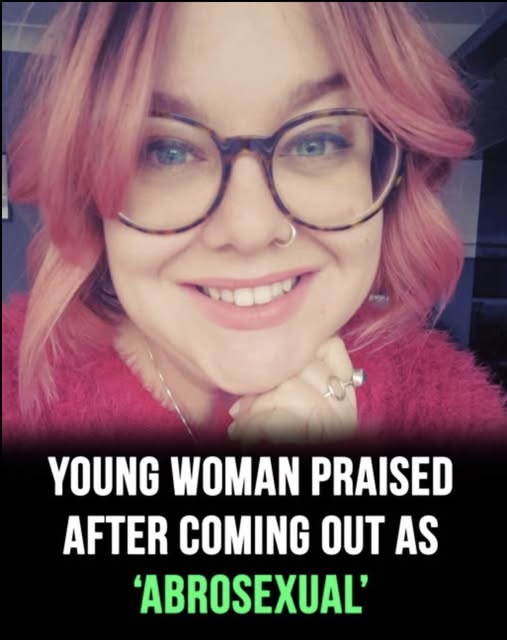
Attraction doesn’t always stay constant, and for some people, it shifts dramatically over time. This confusing experience is more common than many think — and it has a name: abrosexuality.
She originally believed she was a lesbian
To understand abrosexuality more clearly, we look at how one writer’s 30-year journey helped shine light on this often-misunderstood identity.
In a personal essay for Metro UK published in July 2024, writer Emma Flint opened up about her long path toward realizing she was abrosexual — after decades of wondering why her romantic and sexual feelings changed so frequently.
Flint, 32 at the time, explained that she spent years believing she was a lesbian, only to later feel drawn to men, then to no one at all, and then back again.
For most of her life, she said she felt “unsure of who I was.”
“I felt adrift, like I was lost at sea. I also felt dishonest because my identity seemed to change every time I talked to the people I loved,” shared the Staffordshire-based freelance writer.
“It wasn’t indecision — it was that my identity was shifting,” she explained. “One day I felt gay, and a few days or weeks later I felt more bisexual. My sexuality was fluid.”
Everything finally made sense when she came across the term “abrosexual” in an online forum.
“Finally,” she wrote, “I felt understood.”
What does abrosexual mean?
According to Healthline, abrosexuality — a lesser-known identity within the LGBTQ+ community — falls under the umbrella of sexual fluidity.
Someone who is abrosexual may find that their sexual attraction changes frequently: they might identify as gay for a while, then feel attraction toward multiple genders, and later experience little or no sexual attraction at all.
Unlike labels such as heterosexual, bisexual, or pansexual, abrosexuality doesn’t specify which genders you are attracted to — only that your attraction shifts over time.
Reflecting on her personal experience, Flint explained, “I love the person, not their gender, so the fact that my sexuality changes doesn’t impact the relationship.”
However, she noted that some people still demand she “choose a side” so that her identity feels more comfortable to them. “Just because someone doesn’t know or understand an identity doesn’t make it less real,” she said.
How can abrosexuality show up in everyday life?
There’s no single pattern for abrosexuality — it varies from person to person. To help clarify, Healthline describes several possibilities:
Daily shifts: Feeling attraction to one gender one day and a different gender the next.
Gradual changes: Experiencing attraction to multiple genders for months, then suddenly feeling drawn to only one.
Shifting intensity: Going through phases of little or no sexual attraction, followed by periods of renewed interest toward different genders.
Long-term evolution: Identifying as straight for years, then slowly realizing attraction toward another gender.
These examples are broad snapshots, not rules — and that individuality is part of what makes abrosexuality unique.
“We’re constantly learning about ourselves — that’s what personal growth is,” Flint wrote. “One day, I hope abrosexuality is simply viewed as another identity someone might have, not as something trendy or temporary.”
Her story is more than a personal revelation — it’s a reminder of the power of language and representation. Many people may feel confused or “wrong” simply because they haven’t yet found the word that matches their experience.