He became a legend with a gun in one hand and a microphone in the other. Today, decades after his death, Mexican singer Chalino Sánchez’s mysterious murder still captivates fans and fuels speculation—especially after a chilling note passed to him onstage was followed by his killing just hours later.
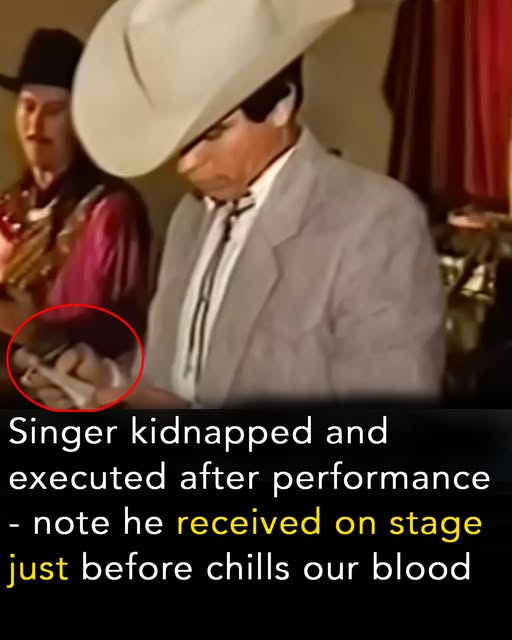
You may not recognize his name, but you’ve likely seen the viral video: a young man in a white cowboy hat pauses during his performance to read a slip of paper from the audience. He wipes the sweat from his forehead, then continues singing.
That man was Chalino Sánchez, widely credited with helping to define the “narcocorrido” genre—raw ballads that glorify the violent lives of drug lords and cartel figures.
But Sánchez didn’t just sing about the narco world—he lived it.
Born in Culiacán, Sinaloa, one of Mexico’s cartel strongholds, Sánchez’s life was shaped by violence from an early age. At 15, he reportedly killed the man who had raped his sister. By 17, he had escaped to the U.S., eventually settling with relatives in Los Angeles in 1984, according to *El País*.
While serving time in jail for minor offenses, Sánchez began writing the gritty songs that would make him famous. After his release, a chance encounter with Chilean artist Ángel Parra jumpstarted his music career.
Sánchez gained notoriety for singing about shootouts, revenge, and drug kingpins—stories that struck a chord with many Mexican immigrants who felt connected to the harsh realities he portrayed. But his brutally honest lyrics came at a price.
In 1992, while performing at a nightclub in Coachella, two men opened fire on him. Sánchez, who carried a weapon, shot back. One assailant died; the other was arrested and sentenced. The incident only enhanced Chalino’s reputation—he was the corrido singer who shot back.
Just four months later, he returned to his hometown to perform at Salón Bugambilias in Culiacán. During the show, someone handed him a note. Its contents remain a mystery, but rumors claim it was a threat from a rival cartel warning him to leave Sinaloa.
After the concert, Chalino was reportedly stopped by men impersonating police officers. They told him a commander wanted to see him, and he agreed to go.
By morning, his body was found on a dirt road—blindfolded, wrists tied, and shot twice in the back of the head—clear signs of a targeted execution.
Despite his tragic end, Chalino Sánchez’s influence endures in the narcocorrido scene. Artists like Gerardo Ortiz have carried on his legacy, continuing to mix storytelling, crime, and notoriety. Ortiz has even referenced drug lords like Manuel Torres Félix, known as “M1,” with lyrics like, “If you’re not good at killing, you’re good at dying.”
Chalino’s story remains a symbol of the dangerous line between art and reality in Mexico’s music underworld.