Cosmetic procedures that modify facial features—such as the lips, nose, cheeks, or forehead—have become increasingly common. Because these treatments are widely available, many individuals offer cosmetic services. Unfortunately, not all of them are properly qualified, which is why it’s essential to seek treatment from licensed medical professionals.
Gina Anderson from Oregon learned this lesson the hard way.
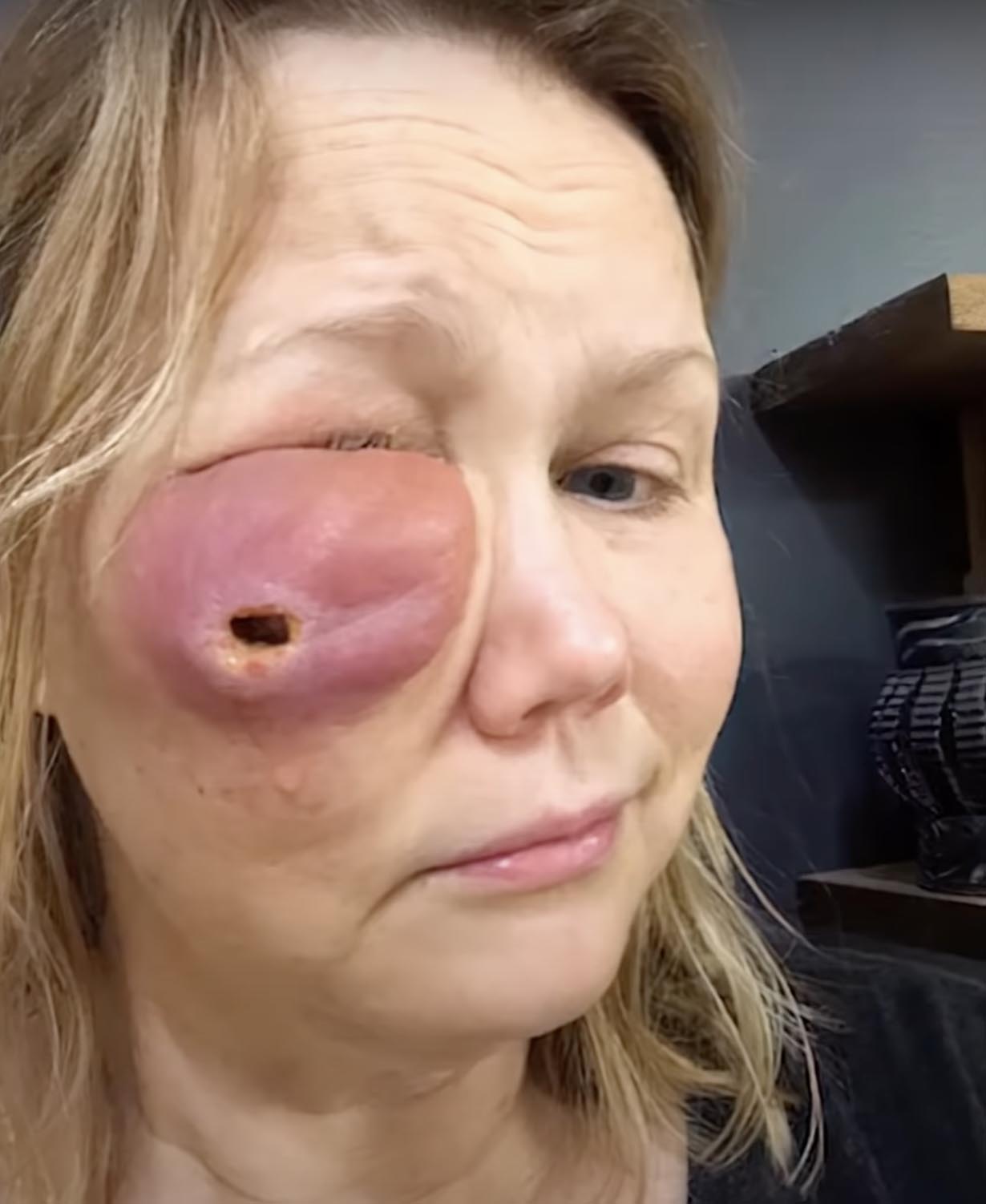
Anderson, a neurologist, decided to enhance her appearance after turning 40. A colleague offered to perform cosmetic fillers for her, but years later the procedure led to devastating consequences. She developed severe inflammation under her right eye, and it was eventually discovered that silicone had been injected instead of the filler she believed she was receiving. Over time the condition worsened until she was left with a large hole in her cheek.
Hoping to repair the damage, Gina sought help from the doctors featured on the television show Botched. Here is her story and how she looks today.
Feeling comfortable in one’s own appearance is extremely important. Whether someone is tall, short, thin, or heavier, the most important thing is self-acceptance. While many people change their hairstyle, exercise habits, or even undergo surgery to improve their confidence, it’s vital that any medical procedure be performed by a trained specialist.
When Gina turned 40, she decided she wanted to improve her appearance slightly. On Botched, she explained that a colleague offered to perform facial fillers, which she believed were common products such as Restylane or Juvederm.
However, the substance injected into her face was actually silicone, which dramatically changed the outcome.
Soon after the injections, Gina began experiencing swelling and inflammation around her right eye and cheek. The silicone caused a serious reaction that deformed part of her face. Although she had injections in both cheeks, only one side appeared to have been injected with silicone.
Several years later, the condition became much worse. She developed a granuloma—a cluster of immune cells that form when the body tries to defend itself against foreign material. According to medical experts, granulomas are a protective reaction meant to isolate harmful substances.
In Gina’s case, however, the reaction became extremely severe.
She recalled that the swelling suddenly grew larger within a short time and eventually burst. Realizing how serious the situation was, Gina began seeking medical treatment. She underwent five corrective surgeries in an attempt to remove the silicone, but the granulomas continued to return. Eventually she was left with a large opening in her cheek.
The condition affected every part of her life. She had to close her medical practice because the pain and exhaustion made it difficult to work. She struggled to sleep, experienced hair loss, and felt constant fatigue.
Desperate for help, Gina turned to the surgeons on Botched: Dr. Terry Dubrow and Dr. Paul Nassif.
Dr. Dubrow explained that granulomas usually appear within months of silicone injections, but Gina’s delayed reaction suggested a slow and persistent inflammatory response that would be extremely difficult to treat.
Even after several surgeries had reduced the visible damage, Gina needed two additional procedures on the show. During treatment, doctors transferred fat from her abdomen to her cheek to restore lost volume.
During surgery, Dr. Nassif discovered unexpected material that looked like a piece of gauze inside the area.
After the procedure, Gina began to feel relief. Her pain gradually decreased, and she was finally able to sleep again.
However, complications followed when fluid began accumulating in her cheek. The doctors identified the problem as recurrent seromas—pockets of fluid that can develop after surgery. Gina had to undergo another operation to remove the capsule causing the buildup.
Dr. Nassif explained that healing after silicone injections can be unpredictable, making these cases particularly challenging.
Fortunately, the final surgery was successful. Gina was extremely happy with the result, and her face appeared much closer to normal. Her energy returned, her hair began growing again, and she said her overall mood and mental clarity improved.
Today, Gina says the experience changed her life.
Her story serves as an important reminder: cosmetic procedures should only be performed by qualified medical professionals. Anyone considering aesthetic treatments should carefully research their provider and prioritize safety.
At the same time, it’s important to remember that self-confidence and self-acceptance are just as valuable as any cosmetic change.